Saturday, May 20, 2006

Latin America: Populismo - Catchphase For A New Era - The P Word


POPULISMO

Latin American politicians, media, and political consultants have adopted a new negative buzzword to denounce the new wave of leftist politicians and their policies. Populismo, in case you missed the connection, translates quite directly populism in English. And yes, it is a common word, but it has a distinctive twist to it. In this new era of competitive elections and mass media all across the continent, this is a native phenomenon and not an enemy or doctrine imposed or imported from abroad. And its symbolic figureheads are elected officials, or running for office and not golpistas.


The NL Word

The last au courant term was neoliberalismo, almost as dreaded a label in recent times, as the "L word" was among US Democrats. And no, the term is not a direct translation of the "Neo-Liberals" associated to certain Democratic politicians like Gary Hart in the 80's - though Hart -as well as every Democrat Presidential nominee since 1988- would certainly be considered neoliberales in Latin American today. In Latin America the liberal part applies to the 19th Century classical liberalism of a la John Stuart Mill, which stood for individual liberty, free markets and free trade. In the 1990's to be a Neo meant believing in a smaller state role in the economy, keeping balanced budgets, and encouraging foreign investment - what any sensible Democratic governor of Arkansas would do.

But in Latin America these policies provoked bitter reactions from many sectors of society. Opposition to neoliberalismo became a rallying point for post-Cold War leftists, nationalists angry at IMF policies, coca growers, unemployed syndicalists, indigenous rights activists, former state workers. In many ways this mimicked the loose collection of groups under the "anti-globalization" banner outside of the region. And in fact, foreign activists became sort of a "globalized constituency" (and source of funding) for many of these Latin American struggles.

Populist firebrands turned the term neo-liberalismo itself into a negative catch-all in the public imagination,identifying it with scandals from privatizations, U.S. anti-drug policies, job loss, foreign multinationals taking over companies. Repeat something enough times and it becomes true through repetition. At its core the spin was simple and effective: blame neoliberalismo for the failure of Latin American countries to reduce the gap between the have and the have-nots in the 1990's - and anything else that went wrong too. Facts be damned! Who cared that the public sectors in many countries dragged their countries economies down, that restructuring was needed, or that free market policies were making Asian countries rich. It didn't matter what you actually stood for, so long as you were against neoliberalismo. But, in the new era you also needed to deliver this effectively through mass media as well as to an international audience.

Evo Morales became the poster child for anti-neoliberalismo movement, both in Bolivia and abroad. He started out leading coca farmers angry at US-funded erradication, and shrewdly linked their struggle to opposition to free trade pacts, the indigena movements, squatters rights, and the intense nationalism of Bolivians. But that is not enough in the new era, he worked the mass media in Bolivia as well as abroad. In the end it worked, by promising to erradicate the Neoliberal model from the country, Evo went from a fringe leader to elected President in a landslide.


Gracias Evo


Time to thank Evo again. His recent meltdown in Vienna in front of a global audience, was a defining moment for the new populismo. Chavez gets a big assist, and deserves most of the credit, after all he has been doing it from the bully-pulpit of the Venezuelan Presidency since 99, now amped up even more by 70 dollars a barrel of Venezuelan crude. He did his best to mess with just about every major Latin American government and Spain right before the conference, guaranteeing fireworks at the meeting. But it was Evo who stole the show, even before it officially started. The party started with May day decrees nationalizing foreign oil and gas interestsay, and sending troops to occupy oil company headquarters including Petrobras much to Lula's annoyance. That was quite a prelude to an eresting summit between Latin American leaders (including Evo and Hugo) and the European Union, now the international press had a neat buzzword to throw around as the angle to the story: its all about that populismo thing.
And the actual show really did deliver! Evo's tirades became the hook, the first big TV moment followed by the tidal wave-like backlash. Just about every major player in Latin America and Spain, got in their soundbites condemning populismo including the Socialist leaders of Brazil and Spain. It became a dirty word, losing any positive connotation left. The contempt with which a Fox or a Toledo pronounced the very word populismo just made it that more dramatic.

What Does It Mean?

One the one hand, it doesn't matter what the dictionary says populismo means, for political purposes it has already been defined. Populismo es bad. Search a little further, and you find it represents both a personal style and actual politics.

What I mean by personal style is Chavez and Morales, whose effective use of mass media and international projection is partly responsible for getting them to where they are. But once the backlash starts, they have become the highly visible poster children, Willie Hortons for an entire continent. What they represent politically is a return to caudillos, the demagouges who pander to voters worst fears to get elected, promise the world, whip their supporters into frenzies against enemies real and imagined to keep power. If the neoliberal was the suit-wearing, technocrat at the mercy of big corporations, the populist is the blowhard who tells everyone what they want to hear, and the prisoner of his own promises to everyone. The old Latin American strongman with little concern for formalities like laws and rules of good governance. Throwbacks who have so little respect and understanding for what makes their economies work that Socialists call them out for it.
So now populismo is a personal insult and a blanket condemnation of whatever it is the populistas stand for. Irony of ironies, you now have populists condeming others for being populistas! When the average Peruvian or Mexican voter, sees Lula, Zapatero, and Alan Garcia(!), condeming the populismos, suddenly Chavez stops being the kind wacky uncle with petro-dollars, and anyone endorsed by him now seems scary. "Define your opponent before he defines you" is a maxim of politics. Politicians like Humalla and Obrador have made careers of fighting the neoliberal bogeyman, now they are getting slammed by the same strategy. Hey, live by the sword, die by the sword, could not have happened to a nicer bunch of guys.

Bolivia: Country Will Not Negotiate With Oil Companies That Litigate

Andres Soliz Rada, Bolivia's Oil and Gas Minister stated in front of the Bolivian Congress that any Oil company which goes to international arbitration in protest of Bolivia's Nationalization decree and new Hyrdocrabon laws, will not be allowed to negotiate new contracts. It goes without saying they will not be allowed to operate and face having their holdings seized.

That is pretty heavy-handed, and not that bright. This government has a short and very selective memory. Companies like Petrobras, Total, BP, et al. were extremely wary of investing in Bolivia in the first place, due to instability and lack of judicial protection. That is why they and the previous government agreed on submitting to international mediation in case of disputes, to provide some sort of security.

These companies can certainly state a case that they entered into binding contracts with the constitutionally elected government of Bolivia at the time, that Bolivia's subsequent governments ratified these contracts by acting under contractual terms (price, etc.), and that relying on the documents singed and behavior the oil companies spent money in production facilities.
Under that view, it well within their rights to file for international arbitration. And Bolivia does have defenses and arguments, they could claim the contract terms are not binding on them, since the contracts themselves are unconstitutional, and hence are not subject to the jurisidiction of any international tribunal.
What Morales government is doing is nothing less than threatening retaliation against any company which acts under its rights. The consequences are huge, if they can not renegotiate within a set period of time, their holdings will be expropriated under the current law. All this attitude does, is prove critics right when they say that the current Bolivian government does not offer and does not intend to offer any security for investments.


BOLIVIA ADVIERTE QUE NO NEGOCIARÁ CON PETROLERAS QUE VAYAN A JUICIO

"Advierto a las empresas petroleras: no se puede seguir juicios de arbitraje a Bolivia y al mismo tiempo negociar nuevos contratos", aseguró el ministro boliviano de Hidrocarburos.

El Mostrador de Chile (www.elmostrador.cl)

El gobierno de Bolivia advirtió que no negociará nuevos contratos con las empresas petroleras que recurran a arbitrajes internacionales contra el decreto de nacionalización de los hidrocarburos firmado el pasado 1 de mayo.
"Advierto a las empresas petroleras: no se puede seguir juicios de arbitraje a Bolivia y al mismo tiempo negociar nuevos contratos. La empresa que va a un arbitraje, se va no más al arbitraje, pero no discute nuevos contratos", remarcó el ministro de Hidrocarburos, Andrés Soliz Rada.
El secretario de Estado hizo esta advertencia ante el pleno de la Cámara de Diputados, donde ofreció un informe sobre los alcances de la medida dictada por el presidente Evo Morales.
"El primer requisito para quedarse en el país es reconocer la nacionalización", dijo Soliz entre los aplausos de los legisladores de una cámara donde el partido de Morales, el Movimiento Al Socialismo (MAS), es mayoría. No obstante, el ministro también sostuvo que estaba esperanzado en que las compañías no apelarán a tribunales internacionales porque aseguró que los contratos se están trabajando con "un gran blindaje jurídico".
Señaló además que las empresas petroleras se sentirán "obligadas e impelidas" a negociar nuevos contratos en 180 días, porque el decreto establece que si no acceden a ello deben abandonar el país.
"De manera que hemos pasado de la mera abstracción a una cosa muy concreta", apuntó Soliz Rada en alusión a la diferencia entre el decreto nacionalizador y la Ley de Hidrocarburos aprobada en mayo del 2005 que fijaba el mismo plazo, pero que fue incumplido por las firmas y por el anterior ejecutivo de La Paz. Con la nacionalización, el Estado boliviano también conminó a todas las empresas a entregar su producción a la estatal Yacimientos Petrolíferos Fiscales Bolivianos (YPFB) y tomó el control del 50 por ciento más uno de las acciones de cinco empresas, tres de ellas mixtas y dos privadas.

US: English As Official....Um..Customary...Umm.....

So the Senate says that English is now our official language. My feeling is that this is mostly symbolic, and is a bone tossed at the haters.

Latina Lista has an interesting piece on this, there might be more to this, particularly with respect to the Voting Rights Act:


The latest example that there are some members in Congress who don't just want to stop with undocumented Latinos are those Southern lawmakers who have banned together this week to halt a routine vote in the House of Representatives to extend the Voting Rights Act.

According to an Associated Press article, for 40 years, Texas and eight other states have had to get permission for any change in election law or procedure. Justice department lawyers have had to review proposals to guard against any veiled efforts to discriminate against minorities.

It's been with good reason. The states most affected by the Voting Rights Act were the ones who were the most guilty of trying to deprive people of color from voting.

And now with the English amendment, it adds a new element to the debate of whether or not to provide bilingual ballots, a provision of the Voting Rights Act that bans discrimination against "language minority" voters.

Texas Republican Senator John Cornyn has gone on record saying that, "In order to be an American citizen, you have to learn English. Why would we continue to publish ballots in a language other than English?"

Yet, nobody ever said that to be a citizen a person has to be Berlitz-proficient. Basic English has always served everyone well. Representative Solomon Ortiz from Corpus Christi reminded Cornyn that "If we want to have these people emerge into our system, we need to also allow them to understand how our system works and have them understand what they're voting on.".


Thoughts to ponder.

As far as English it is the "official" language by law....the law of the marketplace that is. You need English not only to get ahead, but also to deal with things that pop up in everyday life. Many immigrants with trouble in English are either new arrivals or are older. That is common sense, younger immigrants tend to learn English much quicker. And as LL says in her article, people of all ages do make efforts to learn the language. There is a reason why Spanish TV is inundated with commercials for Ingles Sin Barreras. And on the topic of Television, interesting how the most popular cable channel among Latinos - including immigrants- is in English. This is blown way out of proportion.

Friday, May 19, 2006

Racing: Indy 500 paying price for diluted series... USA TODAY

Jon Saraceno in todays USA Today, writing about how the Indianapolis fallen.


Indianapolis 500 is paying price for diluted series
Posted 5/18/2006 11:16 PM ET

Paul Dana has been dead for eight weeks and, not surprisingly, the racing landscape that helped dig his asphalt grave hasn't modified one iota. That not only is tragic, it should be unacceptable for one of the wealthiest families in Indiana and those who mourn the passing of successful open-wheel racing in America.

Saturday is Pole Day for the Indianapolis 500, but the fissure in a bifurcated racing series seems wider than ever. With its talent and fan base diluted and two series choking on the financial fumes of declining sponsorship and television ratings, the race no longer can be considered the "Greatest Spectacle in Racing."

That title, trademark or not, belongs to the Daytona 500.

Rather, it has denigrated into a sorry sight, reflecting an ailing industry and the ineffective unification attempts between IndyCar founder Tony George — his grandfather Tony Hulman bought the track after World War II — and Champ Car's Kevin Kalkhoven.

That is why this time of year no longer carries the cachet it once did, when entry lists, grandstands and hotels were full. Names such as Andretti, Foyt and Unser sprinkle a watered-down, shrunken field. Those famous names merely serve to jog our memories, generational remnants of a bygone era when open-wheel racing was king of the road and NASCAR sucked tailpipe, when delivering money wasn't the prerequisite for climbing into the cockpit of an Indy-style car.


E-mail Jon Saraceno at jons@usatoday.com


Rest of article here

What is unusual about this article is that it appears in the mass media at all. Open wheel racing in the U.S. is now a niche sport at best, hardly rates a blip on the screens of most sport fans in the US. This fall from grace happened after Tony George split the sport by starting the Indy Racing League, reserving most of the spots in the Indy 500 field to his series, freezing out the CART teams. Not only have both series struggled, but the Indianapolis 500, once known as the Greatest Spectacle in Racing -with its largest one day crowds for a sporting event can not even sell out the race. The last 500 before the split, my friends tickets had been passed down by his in-laws, who had waited years to finally upgrade to the Turn 4 location, ticket was easily worth several hundred dollars. Last time I was there to watch Juan Pablo Montoya smoke the field, we just showed up and paid something like 20 bucks for some good grandstand tickets.

Thursday, May 18, 2006

US: Immigration..Who Said This?

"It makes one wonder about the illegal alien fuss. Are great numbers of our unemployed really victims of the illegal alien invasion or are those illegal tourists actually doing work our own people won't do?"....."One thing is certain in this hungry world; no regulation or law should be allowed if it results in crops rotting in the fields for lack of harvesters."


"I've spoken of the shining city all my political life, but I don't know if I ever quite communicated what I saw when I said it. But in my mind it was a tall, proud city built on rocks stronger than oceans, windswept, God-blessed and teeming with people of all kinds living in harmony and peace; a city with free ports that hummed with commerce and creativity. And if there had to be city walls, the walls had doors and the doors were open to anyone with the will and heart to get here."

**


* Ronald Wilson Reagan, in a 1977 radio speech talking about an apple harvest that was lost because there was no workers to pick them.
* President Reagan Farewell Address.


Mr. President, thank you for those words, and may your optimism continue to shine in this land well beyond my lifetime as well.


Cite Cato Institute, found by Conductor

US: Latinos Stand Up! Spokespersons Needed!

I am fed up with media coverage of the Immigration issue, particularly when gems like this one from Fox News come up.

Latina Lista has a post about a new group I Am An American. Their purpose is to organize Latinos who are citizens:

"I Am A Proud American," seeks to utilize technology in order to build a grassroots coalition for pro-active advocacy. We also hope to educate our community about critical issues of our time in hopes of empowering individuals and groups to combine efforts to participate in the civic process. Finally, we will work in partnership to peacefully break down barriers, and to positively participate and affect our respective communities in a meaningful way. We take pride in who we are, and where we come from. We love our country, we are proud to be Americans.


This is a start, but SOMEONE should get on TV and represent.

Lou Dobbs and the rest of the haters can say anything on immigration for hours straight and not get called out.

CNN prime time yesterday, was pretty much one-sided immigrant bashing. During two hours of Lou Dobbs/Anderson Cooper. Lou Dobbs, apart from reporters, hadtwo Latinos on, the Mayor of L.A., and Miguel Perez a columnist - who was the only one who was on for a significant amount of time, and that was as one of three commentators in a panel. Anderson Cooper, meanwhile outside of a blurb of Governor Bill Richardson had no one. Cooper interviewed the scary-sounding Sheriff Arpai of Maricopa County, Arizona, who has formed his own private "posse" to round up, jail and charge undocumented workers with a felony. That is scary, and yet he had no one on to say anything against this craziness.

We need articulate, smart, moderate sounding, reasonable, spokespeople who also have a backbone and can bring it on, when the time comes.

So where are the Latino writers, politicians, lawyers, business types, academics, the marketing and advertising types???? There are enough of them out there.

Wednesday, May 17, 2006

Venezuela: Oil Company A Mess, Still Needs Foreign Money

Interesting piece in Houston Chronicle.

Companies began investing in the Orinoco belt in the 1990s when oil prices bottomed. Eager to increase production, Venezuela offered generous terms like 1 percent royalties. Houston-based ConocoPhillips, Exxon Mobil, ChevronTexaco and other firms sunk $17 billion in four major projects in the Orinoco basin that produce 600,000 barrels per day.

Now, Venezuela wants more.

Last week, Chavez announced that his government will increase taxes from 34 percent to 50 percent on petroleum from the Orinoco basin and that royalties will double to 33.3 percent. On Thursday, the Venezuelan Congress, dominated by Chavez allies, recommended that the state convert the four Orinoco projects to joint ventures with the state oil company — known by the acronym PDVSA, pronounced pay-day-VAY-sa — assuming majority control and management.


Fair enough...Prices have what, gone up by 700 percent.


Playing the fine balancing between bombast, and reassurance...Oh hell, who are we kidding its Baby Hugo, the loudmouth.


Still, some critics say the Chavez government may be overplaying its hand and discouraging private investment.Chavez recently denounced the multinationals as criminals when his tax agency sought to collect fees dating back to 2002. Ramirez has told the foreign firms to expect the unexpected, and Chavez has threatened to torch the oil fields if the U.S. military ever invades.

"The government should just keep its mouth shut," said Mazhar al-Shereidah, an Iraqi who teaches oil economics at Central University of Venezuela in Caracas. "Can you imagine the oil minister of Saudi Arabia talking so much to the press?
"


But the multinationals expect to make that money back. Its all about a barrel of oil at 70 + bucks a barrell, then it makes sense to take less of a share, if profits are higher. And Venezuela would be stupid not to try to cut a bigger deal.

Question is, who is minding the shop>????


Questions also surround PDVSA, which used to be considered one of the top state-run oil companies in the world.

Charging that PDVSA ignored the plight of the poor, who make up his base of support, Chavez has skirted the Central Bank and directly spent billions of petrodollars on health clinics and subsidized food. Largely as a result, Chavez is heavily favored to win another six-year term in December's elections.
...................

"We've had oil for more than 100 years, and this was the poorest of countries," said Alfredo Salazar, a supervisor of mechanics at PDVSA's port operations in Puerto La Cruz. "The new PDVSA dedicates more to the needy."

A 30-year employee, Salazar is one of the few veterans left at PDVSA. During the nine-week national strike that tried to force Chavez from office in 2003, the president fired 19,000 oil workers for joining the work stoppage. The strike failed, mainly because key PDVSA supervisors remained on the job, including Salazar.

Chavez then packed PDVSA with loyalists.

Even pipelines carry pro-Chavez graffiti.


Incompetentence, not in the new PVDSA??
Trouble for joint ventures?

But political fervor sometimes seems to outstrip technical know-how, said Victor Poleo, a Caracas oil analyst.

PDVSA workers used to average about 15 years on the job, but since the strike, that number has dropped to about four years. A recent report in the Caracas daily El Nacional said that nine PDVSA workers had been killed in fires and explosions at refineries over the past six months, an unprecedented number, Poleo said.

"This country lives on oil, but its best people are gone," Poleo said.

That could spell trouble for the new joint ventures because PDVSA, rather than private companies, will manage the operations. The company plans to ramp up production to 5.8 million barrels per day by 2012. But since the pre-strike days of 2002, daily production has dropped from 3.3 million barrels to 2.6 million.

Although some foreign oil executives are concerned that Chavez may one day confiscate their companies' assets, Poleo says that PDVSA's lack of expertise and investment stands as the best argument against nationalizing the oil industry.

"They can't nationalize," Poleo said of Chavez's government, "because they don't have the money or the knowledge.
"

Cuba: Fidel Quits If Fortune is Proved

Boli-Nica is offering a $100.00 gift certificate to either Target, Best Buy, Wal-Mart, Borders, or Barnes and Noble, (or an international money order to anyone outside the US) to anyone who can find a bank account which can be tied directly to Fidel Castro Ruz. Said proof will then be sent to Fidel directly, with a transcript of his statements.

Among the funniest thing ever. The bearded one is really incensed over reports of his personal fortune, and went on TV to loudly proclaim his innocence.

He doesn't need to have a penny in a bank, he has all the equity. Guy is top dog in a country with a centrally controlled economy, and his brother runs the military. A defector in the 80's talked about how Fidel would call up a helicopter to flush out ducks, when hunting.

The best part is he took the bait and blabbed about it on TV. When you live in such a controlled society, you look for little clues in the daily blatherings in the newspaper and what the ruler says. When the ruler keeps on denying having a huge personal fortune, people start thinking maybe he does.

Cuba's Castro says he'll resign if proven he has money in Swiss bank accounts

HAVANA (AP) -- Cuban President Fidel Castro said he'll resign the day critics prove he has money in foreign accounts, in a special television appearance to rebut a Forbes magazine report naming him one of the world's wealthiest rulers.

The 79-year-old leader said Monday on the communist government's daily public affairs program Mesa Redonda, or ``Round Table,'' that he has showed throughout his life that he's uninterested in material possessions.

``Why would I want money, especially now that I'm going to be 80 years old?'' Castro said. ``Why would I want money now, if I never wanted it before?''

He called the report ``rubbish,'' saying ``all this makes me sick.''

In its May 5 article, ``Fortunes Of Kings, Queens And Dictators,'' Forbes put Castro in 7th place in a group of 10 world leaders with ``lofty positions and vast fortunes.''

The magazine estimated Castro's personal wealth to be $ 900 million (euro700 million) -- nearly double that of the $ 500 million (euro390 million) of Britain's Queen Elizabeth II and just under Prince Albert II of Monaco's estimated $ 1 billion (euro780 million).

The article also referred to rumors of Castro having ``large stashes in Swiss bank accounts.''

``I've been listening to this wickedness for nearly half a century -- I don't pay much attention,'' said Castro, dressed in his trademark olive green military uniform. ``Neither lies nor slander are worth anything.''

Yet later on the program, which lasted four-and-a-half hours, Castro pounded the table emotionally, saying, ``If they can prove I have an account abroad ... containing even one dollar I will resign my post.''

In explaining its calculations, Forbes said it assumed Castro has economic control over a web of state-owned companies including a convention center, a retail conglomerate and an enterprise that sells Cuban-produced pharmaceuticals.

Central Bank President Francisco Soberon said, however, that all the money made from those companies is pumped back into the island's economy, into sectors including health, education, science, security, defense and solidarity projects with other countries.

Forbes acknowledged in its article that the estimates for all the leaders are ``more art than science.''


Source Babalu

Tuesday, May 16, 2006

Bolivia: Government To Seize Pension Assets

In what has become an under-reported scandal, Bolivia's new government not only wants the Pension funds stock handed over to it, without payment, it just passed a decree that threatens to take over any fund that does not obey its order to unilaterally transfer the stock to the government directly, without any compensation.
VP Garcia Linera, who emitted the decree, also made verbal promises that the old-age pension, Bonosol, will be paid by the government, substituting for the dividends that the pension funds ownership interest in the capitalized oil and gas companies. This is the second decree that the government emits in this respect, and as the pension director pointed out, nowhere in Bolivian laws, including the hydrocarbon laws, does it authorize the government to simply seize these assets without compensation.

In one fell swoop the government will empty out most of the equity of the pension fund. It is undisputed that the airline privatization was a disaster, most of the value is in this ownership interest in the oil fields, valued by Bolivia's ministry in 1.5 billion dollars.

The point of this whole exercise was to keep the state from doing such short-sighted things. And if it did so, to pay the fair market value of the shares, and leave it in trust for the Bolivian people.

Bolivia Vs. Brazil: Vienna..Name..Calling

This past week has seen a really big row in South America involving Bolivia against Brazil over the nationalization of certain oil and gas holdings. One view has Evo in the middle of a tug of war between Chavez and Lula, but he did a pretty good job of making headlines and aggravating the Brazilians further. Lula and the Brazilian foreign ministry have taken an increasingly critical stance with Morales government over the nationalization decree.

Separating Spin From Fact - War of Words v 1.0

Before the nationalization decree of May 1, 2006, Bolivia passed a its Hydrocarbon law, based on the popular referendum, which raised the tax on natural gas exports. One of the most affected companies was Petrobras, the Brazilian oil and gas giant which is partially owned by the State. After Morales was installed as President, Brazil and Bolivia began negotiating over price, volume and taxation. More or less out of the blue, came the nationalization decree, which was done loudly on May day with plenty of bells and whistles, speeches and troops.

That next week, a photo-op meeting of Presidents Evo and Lula, took place to smooth things out in Argentina. The two were joined by the host President and also, Chavez of Venezuela. According to Reuters, Brazils foreign minister, Lula and Evo were working on "an accord to guarantee natural gas supplies, and Lula said that ultimately they recognized Bolivia's sovereign rights, a Lula aide quoted by Reuters said that "gas prices was the central issue for Brazil." So the message here was that Brazil accepted the nationalization as fait accompli, the bottom line here was over price and any compensation. The week after, a high level Brazilian delegation, consisting of Petrobras President and the Minister of Energy arrived in La Paz, and serious negotiations began, according to all concerned.

So basically they took care of it right??

Not quite, behind the scenes, this mini-summit annoyed at least some in the Brazilian government, due to the presence of Hugo Chavez. What business did he have there??

The week after, Evo Morales in what could be seen as a crowd-pleasing stump speech accuses the oil companies of conspiring with the "mafias" that own media outlets to reverse nationalization. Problem is this ends up in that same media outlets and is read outside as a slight. The largest company is Petrobras, you can not talk about the multi-nationals without talking about the Brazilian company.

Brazil increasingly starts accusing Hugo Chavez of Venezuela of directly interfering in Bolivia. Celso Amorim, the Brazilian foreign minister in front of a congressional committee said President Lula himself had warned Chavez that his interference in Bolivia, jeopardized the proposed South American gasoduct program. Amorin also stated plainly that Chavez wields a huge influence on Evo Morales. In addition, one of President Lula's advisors, accused the Venezuelans of interfering in Bolivia. One clue to what had particularly irked them, was the presence of PDVSA officials at Evo's nationalization decree speech. Venezuela of course, denies it. But it shows an increasingly stronger tone by Brazil before Venezuela.


Vienna Calling


So then this circus moves to Vienna for the EU conference with Latin American leaders. It is here where Evo, makes controversial statements to the World Press. At a press conference on Thursday the 12th, when asked about the Bolivia-Petrobras contracts he responded:

Si quiere hablar de los contratos, le voy a demostrar que son ilegales e inconstitucionales y si quiere saber sobre Petrobras le voy a informar cómo ilegalmente operaron sin respetar las normas de Bolivia

If you want to talk about the contracts, I will demonstrate that they are illegal and unconstitutional, and if you want to know about Petrobras I will show you how they operated illegally without respecting Bolivias norms.


Interestingly enough, he also admittedhe did not consult with/or give advance warning to leaders of countries affected. That is contrary to a claim made, that he was unable to get through to Lula or those close to him, in the critical couple of days prior to the announcement. He also happened to be meeting with Castro and Chavez those days too. This could be taken as a further slight to Lula personally.

Bolivia's foreign ministry tried to put out the fire, claiming President Morales was talking about Bolivia's mulitple contracts with approximately 20 multi-nationals, never ratified by congress and therefore unconstitutional. No dice there, the direct quote is taken from this AFP article. This initial press conference seemed to set the tone for the war or words that cast a shadow over what would otherwise be a boring meeting, according to some articles in CNN and the New York Times

Soliz Rada, Bolivia's dogmatic oil minister further stoked the fire by stating that Petrobras should be left out of Chavez pet project to run a natural gas pipeline from Venezuela to Argentina, ironically via Brazil.

Then Brazil's foreign minister Celso Amorim came out swinging and said his government was outraged at Evo's statements, and even considered pulling its ambassador Other statements were issued by Petrobras and Gas Minister. It seemed that when the Brazilian government was concerned about the security of Brazilian gas and oil interests, it had let Petrobras go public, keeping itself above the fray. Here, they took the initiative.


Still More...


Now we also need to go back to what was happening on the ground in Bolivia. Bolivian and Brazilian negotiators were simultaneously negotiating not only the price of gas, but also any compensation which Bolivia might have to pay Brazil. That would be because Bolivia might have to pay the value for a small percentage of the stock, to obtain a majority interest in the mixed-ownership companies that Petrobras operates. Evo said that Thursday that there would be no compensation for any assets seized, since they had recouped their investment. That is in stark contrast to what Evo, and other s in his cabinet had said earlier.

So this mini-crisis heats up on Thursday and Friday, and then you have the spectacle of Blair, Chirac, Javier Solana, and assorted Euro-types making all sorts of statements, but basically telling Morales and Chavez to mellow out, and try to work with the evil multi-nationals. While BP is a UK concern, Blair does represent the Labor Party of Great Britain, for whatever that is worth to Evo.

Solved on Saturday or Photo Op??
So on Saturday, Lula and Evo have breakfast and essentially say to the world it all was a misunderstanding blown out of proportion by the media.
But consider this story in the AP out of Brazil.
Lula firmly told Evo that he would not live under the sword of Bolivia's gas over him. Clearly this is leaked by the Brazilian government to show that not all was hunky dory.


And Brazil Now??


This has shaken Brazilian policy-makers. The country
s foreign policy the past 60 years has been fairly independent, very measured, and prudent. Its foreign policy establishment takes pride in its professionalism and sophistication; it is undoubtedly very experienced in dealing with governments in the third world. Brazil has cultivated the image of a relatively benign big neighbor, even during its authoritarian military governments, and by and large many South Americans view the giant positively, outside of rival Argentina. And Lula's work behind the scenes with Morales seemed to be a good course of action.

This row with Bolivia is hurting Lula's image in an election year, as he gets slammed in the media:

''Lula for President . . . of Bolivia,'' read a headline of a column in the daily O Estado de Sao Paulo. This week's Veja, Brazil's largest-circulation news magazine, carries a cover showing Lula with a painted oil-stamped shoe on his rear end, and a headline reading, 'Lula went to bed as the `big leader' of Latin America, and woke up as the fool of the court of Venezuelan [President] Hugo Chávez, who plotted the theft of Brazil's assets in Bolivia.''


But beyond, electoral politics and headlines, there seems to be palpable nervousness in the Brazilian public about gas prices. Celso Lafer, Brazil's ex-foreign minister, claims he has not seen this kind of public reaction over a foreign policy issue'in many decades.' according to Andres Oppenheimer. Lafer says this hurts Brazilians national pride, regardless of class. (Bolivia national pride, is at issue too, though) Since the conventional wisdom in Brazil according to Oppenheimer seems to be that this is something that Chavez provoked, Bolivia can still be seen as more of a satellite or pawn (and a victim) in this beef.
More ominous - and undereported- is the fact that some in Brazil's military establshment has taken notice, and considers the nationalization and the potential expropriation of Brazilian-owned farmers a threat to its "national security" and is urging the government tomove troops to the Bolivian border area. And long term they are asking for a re-armament of Brazil's military to protect from future wars resulting from new enemies and allainces.
People like Lafer represent the foreign policy elite of Brazil, and what is emerging is a consensus to shift how Brazil does business in the area. This consensus seems to be shared by the military establishment, as the recent comments from military intelligence shows. Short term, it means that Chavez is seen as its most dangerous rival, and it will be more vocal in seeking to curb his influence. Long term, this new rival is seen as leading to unknown outcomes and complicating life for Brazil.

Monday, May 15, 2006

Bush On Immigration Speech

Bush was actually ok.

So we get 6,000 national guard at the border??

Was that a bone tossed at the right and the anti-immigration lemmings?

Better hope they have geiger counters and chem weapon detection capabilities. That is the "unsafe" part of the border that concerns me.

Is this guest worker program comprehensive??? Seemed to me he is simply arguing for a "temporary" with no measures so folks can become permanent residents. The id card is not a bad idea.

If he is arguing for a temporary worker program, providing for 400,000 permits, split 75-25 b/ween Mexico and Central and South America, that might be a start.

Then, you can bring down the enforcement, and then you get Mexico aboard to seal the border.

Nice response by Dick Durbin, sounded tough enough and noncomittal either way on immigration, got in a dig at Dubya over the National Guard, then got out of there quick. Let the Republicans beat their brains out over it, it will be fun to watch. Could not have happened to a nicer bunch.

Sunday, May 14, 2006

US: Latino Home Ownership Increases Dramatically Nationwide

While this hardly is a surprise to anyone who has done any real estate work in places like California or Illinois, the numbers are staggering.
Across the country, the number of Hispanic homebuyers is climbing dramatically, especially if you look at the name game.

An analysis of public records by San Diego-based DataQuick reveals the top 10 most common homebuyer names in 2005.

On this list appear four Hispanic names, double the amount of 5 years ago.

Included on the list are: Rodriguez, Garcia, Hernandez, and Gonzalez.

The story in California is even more revealing, where the five most common surnames are Hispanic.

Almost 28 percent of all homebuyers in the state are Hispanic, according to a 2005 study.

Undoubtedly, it also means that many undocumented workers are also buying houses, much to Lou Dobbs horror (he did a piece about it some months ago). There is nothing wrong with foreign nationals acquiring equity in the US, paying property taxes, and adding to banks portfolios of loans, right Lou? Sometimes it is done through third parties, usually a close relative either acting as the buyer or co-signer.

Anyways, this is a really good thing.


Source Hispanic Trending

Latin Drivers: Alonso is King of Spain, Super-Mario Throws it Away in Houston, Viso Victory in Barcelona


Image: Speedtv LAT Photography
Image: Photo by Brad Bernstein, USA LAT Photographic
Image: Speedtv LAT Photography

Formula One World Champion, Fernando Alonso delights the huge home crowd at the Circuit de Catalunya, in Barcelona, Spain. The Asturian first got pole position, and then winning from Michael Schumacher. Colombia's JPM gets messed up by team in qualifying then spins it during race, DNF.

Mexico's Mario Dominguez gets the pole in Houston in that city's Champ Car race, leads most of the laps, over 2-time Champ Sebastian Bourdais, but throws it away through an unforced error on lap 66, still makes it to podium.

Venezuela's Ernesto Viso, takes his second win in the GP2 season at the Sprint race, which is the undercard for the Barcelona Spanish Grand Prix.

Pics from Speed TV..

Saturday, May 13, 2006

MEXICO: EDGAR FALLS!!!!

LMAO
This has a taken a life of its own. So some kid named Edgar in Mexico gets messed with by his friends, falls in stream.
but, they tape it, put it on web...


A cult hero is born..before you know it there are edited versions of it, mix tape versions of the audio, its own fan web page, MySpace page and now it has become a ringtone in Mexico...
Remix


Remix With Effects


Edgars Revenge


Edgar Dance Remix


Edgar Super Freak Remix

Edgar Scene Re-enactment

Friday, May 12, 2006

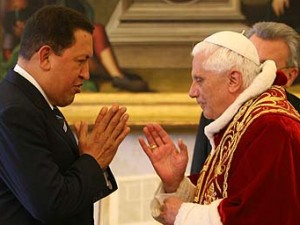
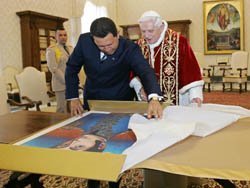
BENNY AND THE DITZ

My son, I am afraid there is nothing I can do for you.


See I am two Simon's...Bolivar and Simon Peter the Apostole


Rock N' Boli Friday: The Replacements Live

The'Mats: fast, loud, sometimes sloppy, but always great

If you like basic rock n' roll and want to see a great band, when they were just starting out this is how you do it.

1981 figuring out how to play their instruments, some shindig for the label, so they prolly weren't that wasted. Pretty much a chunk of Sorry Ma and some other stuff that ended up in Stink. Great footage...

Goddamn Job(off Stink)/Junior's Got A Gun<


Takin' A Ride/Staples In Her Stomach/Careless

kick your door down
Customer/Rattlesnake


86 mainly a sound check before a show, not the greatest recordings either......I almost didn't wanna include 'em......but it prolly is one of the last times they played w/Bob Stinson. So you know they were wasted and pissed at each other. A Buddy Holly Cover and Bastards of Young.

Color Me Impressed

That'll Be The Day

Hayday

Bastards Of Young

Did Evo Really Blow it With Lula --- And Zapatero???


So say you happen to be Evo Morales and you want to change your country's policies, you need friends right? So isn't it great that the president of the biggest country in the area -and a neighbor- happens to be a working class guy who started out as a trade union leader, just like you? Lucky you, the one Spanish-speaking country in Europe - the gatekeeper to the EU- happens to be ruled by the Socialist Worker party. Zapatero, reminds you more of your vice-president than Lula, but he is heir to that PSOE tradition of working class militance, these guys did not back down, paid the cost with blood in the past. Only problem, the largest multinationals in Bolivia happen to be Brazilan and Spanish, and you need to change the rules of the game.

But that is ok too. Because these guys really, really GET IT! The struggle for the means of production, class warfare, fighting big corporate interests, organizing workers and the dispossesed, fiery rhetoric, organizing strikes, boycotts, blockades BEEN THERE, DONE THAT! . Even better all three of you understand what it takes to get to the next level; you are so good at the nuts and bolts of politics you made it to the top through the ballot box. Quite a feat when you start with nothing!

So you know when the time is right you can call Lula. Tell the companero that you made electoral promises to nationalize the hydrocarbons industry. Hey, you want Petrobras as a partner, it represents all Brazilians, no? The real deal here is about the price for gas, and how much you tax it. You gently remind Lula that for the Bolivian electorate this is a done deal, since they voted in droves for the measure increasing taxation and royalties. But, prices, taxes, and volume, that can be fixed the old fashioned way by negotiation, old hat for old union leaders, just need to make sure it looks good for the public.
With a firmer -but still- friendly tone you also tell him about how some companeros in your own party are openly questioning your committment to the program and even your leadership. The population, they tell you, still sees Petrobras signs on the oil companies property and think nothing has changed. Other popular sectors, ones outside your control, are also getting louder in calling for complete nationalization of anything foreign. Lula and Zapatero both know all about the ones at the fringe, the ones who don't shut up. But, you are still in control - for now.

How to fix this? What you need to do is mount a show for the benefit of your voters. Lula understands campaign promises, and if anyone knows about the importance of symbolism it is him. Something can be done that looks great for TV. Maybe send a token force of army troops, raise some flags, make speeches, and change some signs "YPFB-Petrobras." Hey, after all it is 50/50 partners, it is just decorating. Why not have Petrobras' marketing people there to make some tapes to show to Brazilian TV? Throw in a Brazilian dignitary or two, joint communiques just to show it is ok. Lula is after all campaigning too! Nothing is really going to change, things will go on as normal. This is nothing different than one big campaign commercial, you both know it isn't personal.

Even if Lula does not go along with this production, the least you can do is give him a heads up, a days notice to brief some of his people on the ground, get the spin ready on the TV to cover his rear end in Brazil. It is not like he is going to call you out on it publically; if you do it despite his bitching, you will look like a hero in Bolivia, if you don't do it, he looks silly and Chavez makes fun of him. Same goes for Zapatero, maybe Alvaro can go over there and talk to him, he isn't half as tough as Lula.

You would not want to mess it up with Brazil and Spain, specially with understanding government like Lula's and Zapatero If you play your cards right, you can look like a hero, make a better deal for your country on prices, and still get the Brazilians to put more money in the industry. Same with Zapatero, he likes you.

That is done, time to go talk to Hugo Chavez and Fidel on some stuff....

Thursday, May 11, 2006

Whose Your Papi? Name Lou Dobbs Love Child


LMAO..
These jokers out of Los Angeles' top rated English language Latino radio talk show, The Pocho Hour of Power on KPFK 90.7 FM , Fridays at 4pm, have a contest for undocumented workers:


"POCHO HOUR OF POWER RADIO SHOW OFFERS PRIZE TO FIRST ILLEGAL ALIEN TO HAVE LOU DOBBS BABY

[The] first undocumented immigrant to name their U.S. born child "Lou Dobbs," before September 16 th, 2006, will win $500.00 worth of baby nursery items from participating East Los Angeles merchants supporting the Name Your Baby Lou Dobbs Challenge."


Lou....Quien??

Lou Dobbs is the pompous windbag who unloads on undocumented aliens every f!%cking day on CNN. At one point it appears he was a decent business reporter, but just started getting wackier starting with an anti-trade and protectionist crusade that at first won him props on the left, but his dogmatic views and lack of balance weirded them out pretty quick. When bad economist populism didn't produce monster ratings -and as his feeble mind rotted away - he added an equally relentless anti-immigration crusade to the mix. Dobbs continues to be strident and bombastic, makes no pretense of objectivity, puts questionable guests whom he identifies as experts and/patriots.
This lunacy has people across the political spectrum wondering variously about the guys sense, views, and sanity. FAIR on the left calls him out, and on the other side the National Association of Manufacturers has an on-going blog Dobbs Watch that chronicles the madness. The normally measured, Andres Oppenheimer, has referred to him openly as leading the "wave of Latin bashing that has filled the air waves over the past two years," angering Latinos and energizing them across the country.


[H]ow would you feel if you were an undocumented Mexican gardener returning home after a 12-hour workday, turned on the TV set, put your feet on the coffee table and came across CNN's Dobbs warning America that you are a potential health risk, in addition to being a potential terrorist, a possible secessionist agent, who on top of everything is taking away American jobs?
On March 30, an alarmed Dobbs informed his audience that ''diseases are making an unfortunate comeback in the United States'' because of illegal immigration. On March 31, Dobbs alerted America that some Mexicans ''want to see California, New Mexico and other parts of the southwestern United States given over to Mexico,'' and that they are using illegal immigrants ``as an army of invaders to achieve the takeover.''


Dobbs is a world-class idiots, who takes statements by three idiots, and blows it way out of proportion. Worst part is, this character is on CNN, which has that whole Darth Vader-voice-credibility. Anti-immigration lemmings all over the US get ammunition for their cause by repeating the rants of their hero.

.....Anyway...I will get off my soapbox and say that this contest rocks!! certainly be a proud PAPI. Maybe he can hire a fine American worker to change both Juniors diapers and daddy's Depends (tm) and colostomy bag.

Hey The Baby comes with warranty!!


•Baby promises to gurgle adorably, work cheaply
THE BABY LOU DOBBS PLEDGE:
Baby Lou Dobbs thanks you and sends you his love! Baby Lou Dobbs promises to work hard for the American dream, even at below minimum wages for extended hours with no overtime. Baby Lou Dobbs promises to pay his taxes, to diligently report for jury duty and to always wash his hands before returning to work.


Helpful Suggestions:

Other acceptable nicknames for "Lou Dobbs" in the Name Your Baby Lou Dobbs Challenge are, Potato Head, Beaner Town Boogie Man and Y.T. Bashaspick.


LOL...

Dobbsh@t, works great too.

Source: Vivir Latino

Wednesday, May 10, 2006

Bolivia: Did Evo, MAS Loot Bolivia's Old Age Pension Fund???

Bolivia's Pension Fund Administrators, who administer the fund on behalf of all Bolivians, are demanding that Bolivia's government pay the fund the value of the stock it held in the newly nationalized oil and gas companies. Soliz Rada, Bolivia's rather strident gas and oil minister, has publically refused, claiming the fund is not entitled to any money under the new decree.

Confusing???

When Evo Morales' government decreed the "nationalization" of Bolivia's Oil and Gas companies, it stated its claim based on Bolivia's ownership of half the stock of these companies. This statement on who owns the stock is the crux of this problem.


Capitalization and Pensions

Under the innovative capitalization law in the 90's, the Bolivian government did not privatize YPFB (the oil company) outright. What it did was separate the company into several upstream and downstream units, and spun each one off. In return for a 50 percent capital investment, private buyers could acquire half the stock and get management control. In effect, what they paid had to go specifically towards investments in the company.

YPFB's 50 percent share of the equity, as Economist Rosemary Thorp describes it, "was [now] formally owned by all Bolivians of voting age, and was held in new collective pension funds, with the legal obligation to provide a universal and equal annual pension, a 'bonosol', to all Bolivians of 65 and over."

This was a unique approach, meant to avoid the problems of privatizations in Eastern Europe and Latin America, and to provide a viable system of social security. In order to accomplish both goals it ensured that capital coming in went straight to needed investments. Had funds gone to the treasury, it could have ended up as a quick fix for budget and foreign debt problems, besides being subject to sticky fingers.

While capitalization did not go right in the case of the airlines, in oil it looks very succesful. The mixed ownership companies were until fairly recently, autonomous bodies and could operate as efficiently and profitably as is possible in Bolivia. And it is undisputed that YPFB attracted several billion dollars in investment into the country, and the gas industry has increased hugely.

The reasoning behind making Bolivias pension fund the sole beneficiary of the ownership interest of the YPFB, was to eliminate YPFB as a source of patronage, cronyism, and theft for whatever government happened to be in power in power. It also ensured that the pension funds held assets, that were outside of the grasp of the same greedy politians. If a future government wanted to divest Bolivia of these assets, it was not entitled to the proceeds by the same logic, and any proceeds went directly to the fund. Conversely a government re-nationalizing the companies or at least assuming a bigger role in ownership, would be required to pay the pension fund the fair market value of the shares or risk the very integrity and soundness of the fund.

Under Bolivian Law, the pension fund administrators hold these shares, under a a constitutional mandate based on three Bolivian laws: the Bonosol Law the capitalization law , the law of popular credit and property PCP laws have preeminence over decrees in the Bolivian system. So now the present nationalization decree calls for the stock in these entities to be transferred from the pension funds to the government, and without compensation. Soliz Rada's claims that stock never was never formally transferred is wrong, since the decree itself admits the funds held the assets. In addition, there is ample documentary evidence that this has been recognized as fact by Bolivia's Government and Courts. Further, it is written into the law and the contracts and the corporate charters of the individual companies - which even the government is following in attempting to appoint new directors.

Morales and MAS want to ignore laws, and impose their will on everything by decree - like most tin-pot authoritarians. And there is a hint of pure ideological hatred and resentment in these actions. While Evo and Soliz Rada were as expected among the loudest critics of capitalization, MAS also opposed the pension scheme and the pre-natal care laws, on grounds of fiscal responsibility!! And this coming from the left!

Ideas like capitalization and the Bonosol, were just too much for the dogmatic ideologues around MAS like Soliz Rada. Beyond the deep hatred of Goni, they deeply resented new ideas they could not undersand, and were outside their narrow frames of reference, and which they suspected might actually work. So now they go about trying to erradicate these concepts from the Bolivian mind and polity with a vengeful single-mindedness, and they forget who they are really hurting - the Bolivian people.

Colombia, How Some FARC Members Indicted in US

This indictment and the affadivit in support, alleges that certain FARC members conspired to send Cocaine to the US. What really gives this some teeth is the fact the feds have the FARC people on tape. The Miami Herald article says a snitch on DEA payroll, sold the FARC several supposedly untraceable Satellite Phones, which actually had listening devices.

One of the counts also mentions that one of the indicted was responsible for FARC cocaine laboratores in Paramilitary (AUC) territory. Production facilities within an avowed enemies territory??? Sounds like active cooperation to me; a labratory requires protection of facilities and free transit.

Carlos Mencia Is Damn Funny - And Latino

As I said last year, I think Carlos Mencia is funny as shit, watched him back when he did Loco Slam. And his comedy show on Comedy Central Mind of Mencia, has become much better this year, his monologues and skits are hilarious and topical.

On the handicapped, Way Un-PC, but dropped dead hilarious, and even sneaks in a point or two


Mencia on Terrorism, Jingoistic?? Yeah, But Funny as Hell


On People's Music Tastes

I dig everything....all types of music...and I don't mean that I'm like one of those stupid people that say..."I LOVE ALL TYPES OF MUSIC EXCEPT RAP AND COUNTRY MUSIC..." Well guess what???? YOU DON'T LOVE ALL TYPES OF MUSIC SO STOP SAYING THAT YOU DO!!! That's like saying..."I love neopolitan ice cream...BUT I HATE CHOCOLATE AND STRAWBERRY...


Not Mexican?
What is funny, is that comedian Joe Rogan called Mencia out for "not being Mexican" (in addition to stealing material).

He sells himself as being mexican, but the reality is his real name is Ned Holness, and he's actually half German and half Honduran. The mexican hook is something he did to ingratiate himself with the local Mexican population of LA where he started.

Since I can remember Carlos has always said he was born in Honduras, that his mom was Mexican and that he was raised in East LA. As this Washington Post article says: He was born in Honduras as Ned Mencia, son of Magdalena Mencia, a Mexican, and Roberto Holness, a Honduran. When he was 7 months old, his family moved to Los Angeles, where he was raised by his mother's sister and her husband in East L.A.. He also lived in Honduras as a teenager.
Carlos himself inhis blog
My birth father’s name is Roberto Holness. When I was born, my mother was pissed off at my father and decided not give me his last name. She had a brother who was married but unable to have children. (Her brother is the one in my family that came to America first and then went back to Honduras to get the rest of his family). My mother did the most amazing thing a parent could do; she gave me to her brother and his wife to be raised as their own. I grew up with my biological mother and father, brothers and sisters living just next door. Out of respect for my birth father, my mom and dad decided I should still use his name even though my legal name (the one on my birth certificate) is Ned Arnel Mencia. All through school I was known as Ned Holness. I’ve never try to hide this, but only people who know me personally or have heard and or read all of my interviews and articles would know this.

So the guy's dad has a German last name, or maybe even is German.BFD, still makes Carlos/Ned, Honduran by birth. Heck, my maternal last name is Irish, doesn't make my moms family any less Nicaraguan. If anything Mencia's origins, represents what Andres Oppenheimer has called the trans-national identity of some Latino immigrants. We move back and forth across borders, might have parents of different nationalities. We navigate fairly seamlessly between different cultures and nationalities as a matter of everyday life; culture surfing as a friend once referred to it. If anything, it probably helped to turn Carlos Mencia into such a sharp observer of everyday life among the different groups that make up the American - and Latin American fabric of life.

Monday, May 08, 2006

Venezuela: Good Article on Oil "PDVSA The Dispassionate Story"

The story about how Petroleos de Venezuela S.A. or PDVSA has been run into the ground by Chavismo needs to be told, and is very relevant today with what is happening in Bolivia, and potentially Argentina.

At its height, it was considered one of the best-run state enterprises in Latin America. By and large people attribute this to the quality of its work force. It recruited some of Venezuela's best and brightest, and sent many of its employees to graduate schools in the U.S. and Europe all expenses paid. This meritrocratic approach ran against the grain of the traditional crony system, and unfortunately it set up clashes that only worsened as Chavismo with its single-minded vision took power.


The Author of the article:


Luis A. Pacheco earned a Ph.D. in mechanical engineering from the Imperial College, University of London. He then worked at PDVSA for 17 years, leaving in 2003 after serving as the executive director for corporate planning.


This article appeared in Petroleumworld


Luis Pacheco :
PDVSA, The Dispassionate Story


The Energy Tribune has run several pieces on Venezuela and PDVSA and I feel the dispassionate story must be told.

When PDVSA was created in 1975, as a result of the nationalization process, there was a natural apprehension that it would follow in the steps of all the other failed Venezuelan state enterprises. Against the grain, the company evolved – from a loose coalition of E&P companies into a major integrated oil company and a relevant factor in the world energy scene – through a succession of governments.

But that evolution was not without its price – a very important political price. The technical and commercial success of PDVSA left in its wake a number of tense situations. For example, the OPEC quota policy was always a contentious issue between Venezuela’s oil ministry and the company. But there were other sources of irritation: among them, the salaries of oil workers, the investment overseas, and the debate on what to do with its generated revenue. Most of these issues were never resolved to the satisfaction of the political establishment, and they re-surfaced years later with a vengeance.

Of course, this is all hindsight. The PDVSA managers were raised in an environment that strived only for technical prowess and were ill-equipped to be sensitive to the potential political nuances of their activities. In modern management speak: PDVSA was not very adept at managing its stakeholders. In turn, there is no doubt that the political actors cared very little about understanding the details of the oil industry, so long as it was generating enough revenue.

The success of the “Apertura” (the opening up) strategy in the 90s, which allowed the controlled participation of the international oil companies in the upstream business, gave Venezuela access to capital and technology. And that technology was necessary to fulfill the potential of its huge hydrocarbon resource base. The Apertura helped thrust PDVSA into a competitive environment, which was instrumental in counteracting the inevitable inefficiencies resulting from its legally designated isolation. All of these events created political friction.

When President Hugo Chávez came into office in 1998, he did not arrive alone. He brought with him a prejudiced opinion about the oil industry and its workers, borne from all the previous tensions and misunderstandings, and he was accompanied by a cadre of PDVSA’s historical enemies. Not surprisingly, the PDVSA establishment was apprehensive about its new political masters. These two forces were bound to clash sooner or later, and after some skirmishes, the tensions exploded destructively in the widely reported but little understood PDVSA crisis that boiled up in the spring and winter of 2002.

PDVSA is no longer the proud company that it once was. Thanks to the firing of more than half of its workforce, it has lost its former vitality. As modern economists and managers have come to understand, the soul of any corporation, in particular one as complex as PDVSA, resides in its people and their expertise. Without that, no modern organization has a sustainable future.

Surprisingly, the PDVSA name still remains. The oil keeps flowing, although at a steadily decreasing rate. The people left inside, old and new, still retain their spirited hubris. It comes with the territory. But the life force of the organization has been irretrievably lost. Today, PDVSA is little more than a political tool in the hands of the shrewdest political operator Venezuela has ever known, and a blunt instrument with regard to the future of the Venezuelan oil industry.

After more than 80 years of oil industry, Venezuela has not yet discovered how to live harmoniously with it. From unrestricted private participation to unbridled state intervention, we have not managed to grow beyond the primitive stages of rent-seeking behavior. Sooner or later, the state-owned enterprises are bound to fail, either through inefficiency or as victims of political expediency. PDVSA will not be an exception.

The company is like a wounded giant, dizzy and without a sense of direction, running around in circles. It appears to be incapable of moving forward under this or any other government. Sadly, it doen’t seem that the story will have a happy ending. The state has proven to be an incompetent manager of the oil resource. Venezuela has to start thinking anew, while there is still time left for its oil.

Bolivia: Nationalization and Disfunctionality

Bolivia's first real nationalization of its natural resources, did not happen after the Chaco War, or the National Revolution of 1952. We have to go back to 1924, when, Simón Ituri Patiño, bought out Chilean interests Bolivia's then booming tin mining industry which by 1910 produced 20 percent of world production.

Patiño, who started out as a lowly clerk, was very much in the mold of America's robber barrons, and is considered the first modern Latin American capitalist. He controlled extensive holdings in tin production, not only in Bolivia, but worldwide to the point where he arguably rigged pricing of the metal. In Bolivia, he came to symbolize the rosca, or the screw, which together with two other families, exerted vast influence in the country's life. They made billions of dollars from Bolivian mining, most of that capital leaving the country, and forever leaving a bitter taste in many Bolivians minds.

What is less known is that at one point, Patiño had offered to finance settlement efforts in the underpopulated eastern lowlands, to increase agricultural production, and to build a railroad from there to the highlands. He had less than pure motives; he wanted a steady source of food and wood for his vast workforce in the mountains. In those critical first couple of decades of the 20th century, Patiño was generating a lot of cold hard cash, and was willing to invest at least some of it in Bolivia - he started and financed the country's first real national bank. But,his proposal went nowhere, because a squabbling Congress refused to give him a concession. Other plans of his ended up with the same fate, through legal and political wrangling. Patiño then simply went about his business, building his own railroads, sending his capital abroad, bribing politicians to avoid taxation, and moving his influence around through his army of lobbyists.

In the end we will never know how much of his capital Patiño was willing to keep and invest in Bolivia, but it is clear from this tale, that when there was a rare window of opportunity, when capital was ready and available for valuable improvements in the countries interests, but that it was killed by stupidity. As a result the railroad from Santa Cruz was never built, the East continued to be isolated for decades, and Bolivia was mostly a net importer of food.

Unfortunately, Bolivia has continued with a cycle of lost opportunities, and bad timing. The left loves to mythologize the 2002 "Gas War," celebrating it as some big victory. Reality is that much opposed plan people opposed (some paying with their lives) involved foreign companies willing to finance and build a pipeline to a Port in Chile, to set up the capacity to produce liquid natural gas for export to ready customers in the United States. It is 2006, Bolivia does not have a pipeline to a Pacific port, does not have facilities and capacity to produce liquid national gas for export, in a world where there is rising demand. HOW GREAT IS THAT??.

When the military government nationalized Gulf Oil's holdings, they got basically a turnkey oil-producing operation, with sizeable reserves, which could produce, store and ship oil to customers anywhere in the world. Despite initial losses caused by a fairly loud Gulf campaign worldwide, after settling, Bolivia was in a great position to take advantage in the post 1973 rise in oil prices.

There are critical differences between 1969 and today. Then it was mostly about oil, which unlike gas, is easier to store and ship. And Bolivia's gas industry is still in its infancy, with crucial new investments needed not only for further exploration and industrialization, but also for maintaining current production levels. The past four years have seen investors panic and cancel investments. Evo's show of force supposedly "nationalizing" the gas and oil fields, might have sunk any remaining confidence, despite the fact that this is nowhere near as drastic as early expropriations. But the damage is done, and the country stands to lose in the long run, and it can not go it alone to develop its resources. The cynical lesson is that you should at least wait until the enterprises you want to expropriate are fully funded and projects completed, before taking them over. To paraphrase Lenin, let the capitalists sell you the rope with which to hang them. But here, it appears that Bolivians might have both jumped the gun and shot themselves in the foot, again.

Thursday, May 04, 2006

Bolivia: Roundup of Nationalization Stories.

This is a great source of links to stories about Evo's latest gambit, which also includes stories from reactions in other countries. Also a timeline with links

All in Spanish

BOLIVIA: EL ESCANDALO DE AUDITORES VENEZOLANOS

Pareciera un chiste de mal gusto, el Presidente de la Republica De Bolivia trae auditores de la Petrolera Venezolana PDVSA, para que supuestamente hagan "auditoria" de las petroleras.


QUE CREDIBILIDAD TIENE ESTA GENTE, para hacer una auditoria honesta. !!!

PDVSA es una empresa estatal corrupta e ineficiente que no tiene control de sus propios finanzas, donde decenas y possiblemente cientos de millones de dolares se han esfumado. Si sus auditores no saben donde va la plata en su propia empresa, menos van a tener capacidad para hacer una auditoria satisfactoria.

Y aun si ese no fuera el caso, es un conflicto de interes tener a empleados de un competidor de Petrobras, Total, etc, haciendo una auditoria independiente.

Encima de eso, PDVSA es la sombra de la empresa que era antes. Es una estatal cuya misma capacidad tecnica ha sido arruinada por el Chavismo, que despidio miles de sus empleados muy capacitados a todos niveles, y los reemplazo con gente cuyas unicas credenciales son lealtad al Supremo Venezolano.

En vez de ir a Bolivia, estos supuestos auditores deberian de venirse a Miami a investigar las propiedades que altos ejecutivos de PDVSA y sus familias parecen estar collecionando como casas miniaturas que se venden en Carnaval. Esa si seria una auditoria interesante.

Bolivia: Venezuelan Auditors... Huh???? FUERA PDVSA

This is a bad joke.

I wrote before about how Evo Morales' government had brought in Venezuelan auditors to conduct an audit of the troubled national Airline, Lloyd Aereo Boliviano, angering Bolivian employees.

Well, according to this article in the New York Times, Venezuelan auditors from PDVSA are supposedly going to be helping in the audit of the newly nationalized foreign oil companies.


As a first step, auditors from Petróleos de Venezuela, that nation's oil giant, visited three foreign companies in Bolivia and announced that they would be involved in the audits, an executive of one company said.

The Venezuelan company is also providing technical help to Bolivian authorities and is to sign a contract to build a gas separation plant.

Go home and clean up your messes there!!! PDVSA is a poster child for massive corruption and disfunctionality in state agencies. How qualified and credible can these auditors be, when tens of millions of dollars (at least) have completely disappeared from company books??? In the greater scheme of things, who needs advice from a company that despite an oil boom windfall, squanders money like crazy, and can not even keep up with its supply contracts keep up production.

How fair is it??? It is a huge conflict of interest, since PVDSA is a competitor of these same firms, (and sometimes even a partner). Employees of an oil company -which stands to gain- should not be doing audits of the holdings of its competitors on behalf of a national government.

PDVSA is a corrupt, politicized, and inneficient company. Chavez laid off thousands of its most competent and well-trained employees replacing them with political hacks and cronies. It lacks the means to fairly audit, or for that manner advise any other oil company. They have repeatedly failed to account to the Venezuelan people about where their oil wealth is being squandered, maybe they should stay at home and work on that.

Then again, maybe PDVSA auditors should travel out of Venezuela, not to Bolivia though, they should instead come here to Miami to audit the real estate holdings of high PDVSA officials and their families, most of it bought quite recently.

Tuesday, May 02, 2006

Trippy Reggaeton??? Calle 13, Voltio

Calle 13, are two half-brothers from Puerto Rico, who go by Residente and Visitante. Graduates of art-school and computer science respectively, these guys laid down some of the most inventive hip-hop ever done in Spanish with clever rhymes and intriguing musical back beats. It is pretty trippy stuff, close in spirit to A Tribe Called Quest, with a nod to Beck. Definitively not your average cookie-cutter stuff, this sets the bar high for current reggeaton and spanish hip-hop. Videos are not your standard issue bling-blineo and hot mami's.....Well actually, lets just say there is no bling. LOL

They first hit it big with Se Vale To-to.. and then their current hit. Atrevete-te, where Residente beeseches, his rather “intellectual” love interest to "levantate ponte hyper" even if...“te guste Green Day..... que importa que te guste Coldplay”. Latest is La Jirafa, which is even more out there. Good stuff.

Residente,also mixes it up with another highly inventive MC Julio Voltio on Chulin Culin Cunflay , with its absurdist lyrics and wacky video - product of repeated watchings of Kung Fu movies and Starsky and Hutch reruns.
Voltio, who got his nickname after being electrocuted on his job as an electrician's assistant, on his debut solo album, had another off-the-hook track, Se Van, with the multi-talented Abayarde himself, Tego Calderon. Love the agressive energy and pounding back-beat of this number. cool video too, kind of a noir in the tropics deal.

On his last album, Voltio rounded up Miami's Cubano MC, Pitbull, So-Cal Chicano Rapper Lil Rob, re-mixed his track, Bumper .. This example of Latino unity...is ultimately an ode to...the female booty......regardless one of 05's hottest tracks, and a kick-ass production by Luny Tunes, who masterfully combined Voltio's boricua stylings, with Pit's manic crunked-up Miami sound, and Rob's laid-back, cholo-cool flow.

Props to Mundo Reggaeton for up to date videos.

New Chili Peppers Tune...

Great tune, video rules... how many references to different bands can you find?? Misfits imitation rules!

Dani California

Brazil: Ayrton Senna Remembered


You can never have too much Senna. Cool video, narrated by the one and only Murray Walker, about the Paulista 3 Time Formula One Champion.

Monday, May 01, 2006

Note From Chicago Protests...


I must say, I totally dig Chicago. The city has a blue-collar, common-sense flavor to it; a town of hard work and diverse close-knit neighborhoods. It is a city born of inteimmigration and migration. New immigrants with their work ethic have no problem adopting the city's ethos. And that extends to its surrounding suburbs such as Joliet, Aurora, and Waukegan. You get the feeling sometimes, that it is America at its best. The Trib has a great blog-like summary of todays protest in Grant Park, those little snippets that captured some pretty big moments. And this picture in the Trib, taken by a reader, John Matt Dorn, just seems to sum it all up. Its about as Chicago as you can get.

Starting at my old neighborhood in Wicker Park, moving to Grant Park.


Its Everyone..hey even Palestinians and Israelis.


10:30 a.m. About 150 people had gathered at Division Street and Milwaukee Avenue by 9:30 a.m., unfurling U.S., Mexican and Polish flags.

"I am seven years here. I love America," said a burly Polish construction worker who identified himself as Jan Kowalski. "We work 10 hours a day, 6 days a week. I pay taxes. I pay Social Security."


9:40 a.m.: At the Korean American Resource and Cultural Center on the Northwest side, dozens of Korean and Filipino immigrants boarded school buses around 10 a.m., saying they wanted to add an Asian-American presence to the march.

Bryant Kim, 24, of Chicago, adjusted the red, blue and yellow sashes of his traditional Korean outfit. He planned to play at the event with the IL Kwa Nori (Work and Play) percussion troupe.

"By participating, this shows that immigration is a universal issue," he said.


11:15 a.m.: The Wicker Park feeder march headed south on Ashland Avenue with a sound system blaring the late '70s anthem "Ain't No Stoppin' Us Now" and the song "Walk This Way."

The crowd, having swollen to more than 1,000, displayed multiple flags from the Palestinian Authority, the Philippines, Poland as well as the multicolored banner of gay pride.

But the U.S. flag dominated. Amber Javed, 23, of Chicago, carried a sign in Urdu that translated: "We are America."

"It's going to be a beautiful day," said Javed, an immigrant from Pakistan
.


12:01 p.m.: The head of the march is now at Des Plaines and Madison Streets, led by a row of flags from Israel, Japan, Argentina and more. The sign on the pace car reads: "We are are here, like it or not."


Some skinheads trying to cause trouble......


12:38 p.m. There is conflict with three or four skinheads on LaSalle Street. Charles Williams, deputy superintendent of patrol, takes a handful of officers into the crowd and kicks them out. The crowd cheers the police, chanting "paz. (peace)."


There is something really compelling about that image, that made me crack a big smile....


The unruly demonstrators..demanding special rights...

The crowd now is chanting, "We want to pay taxes!"


Peaceful And Orderly


4:17 p.m.: Charles Williams of Chicago Police Department now estimates the crowd at 400,000.

He says no arrests were reported as of about 3:45 p.m. One person needed emergency medical service and transport by the Chicago Fire Department after fainting. A few kids ended up at the lost child tent.

Williams says there have been no huge traffic hassles and he calls the demonstration "a very good march."


7:52 p.m. At a wrap-up news conference Monday night, Office of Emergency Management and Communications Executive Director Andrew Velasquez said there were no arrests during the rally.

The office handled 10 ambulance calls -- "none of which were trauma" – with more than 200 firefighters, paramedics and other Chicago Fire Department personnel on hand, Velasquez said.

Although the rally attracted about 400,000 demonstrators, "at no time, I repeat at no time, was order disrupted," he said.

After the demonstration, crews from the Department of Streets and Sanitation cleaned up what they regarded as a "moderate" amount of debris.

Deputy Supt. of Police Charles Williams said the 400,000 people "were able to peaceably march and get their message out without breaking the law."

Williams credited march organizers.

"What we had were organizers who had volunteers along the march route to keep the peace," Williams said. "They helped police themselves, which assists us.
"

Bolivia: Evo Orders Seizure of Oil and Gas Fields.

This is silly, the army was ordered to seize gas and oil fields, and did so with big fanfare.

Before I go into hysterics, I will say that this has ample precedent in Bolivian history, going back to the seizure of Standard Oil's holdings by a military government in 1937, and the later expropriation of Gulf Oil in 1969. In both cases it was military regimes in power that did this, and like Evo's actions were also done with a lot of flash.

Both were US owned companies. And as a result, the US government, under FDR, and then Nixon pretty much did....... nothing. Actually, FDR's government got Standard to reduce its claim, and then brokered the deal that effectively settled Standard's claims. Bolivia paid a minimal amount, and in return received millions of dollars in US credits, with which it set up Yacimientos Petroliferos. There was of course, an issue about the US simply wanting Bolivian tin supplies during WWII.

The seizure of Gulf's holdings, which were much more substantial, provoked a collective yawn from the Nixon administration which continued to engage the left-leaning military government of Torres and then Ovando. The military government,from the beginning indicated it would indemnify the company, and reached a settlment with Gulf eventually. While the Banzer regime which overthrew Ovando's government, was more to the right, it happily kept the oil fields, and actually negotiated a reduction in the indemnification amount.

All in all, the Nixon and Kissenger team had little concern for Bolivia, their big issue in South America was Allende, which in the greater scheme of things was insignificant considering Vietnam, detente with the Russians and the opening of China.

So in the present case the seizures affected European and Brazilian companies. US interests affected here include mainly Exxon holdings. Given prior US policy towards Bolivia, I do not see that much of a backlash in the US about this.

But, Petrobras and Repsol-YPF, are pretty ticked off, and Lula and Zapatero's governments have already shown a lot of displeasure. I would think that they would have been forewarned - particularly Petrobras, and this appears to not be the case.

Boycott--Immigration Roundup

Nationwide, people prepare for the day.
In the Miami Herald, South Florida Businesses brace for the Boycott. Debate is About Real People Leonard Pitts Jr. weighs in from the Miami Herald.

Why Even Crack Down? Wonders MITCHELL SCHNURMAN.

Washington Post on why people do cross the border. and what about those remittances?

A.M. Mora at Publius is trying to make sense of it all in LA.

Classic Spanish Rock Videos: Aterciopelados & Soda Stereo

Some of the biggest classics of Spanish rock from two of my all-time favorite artists. Props to YouTube, some of these videos are hard to find, not even Mun2 has some of them.


Aterciopelados, Andrea rocks hard in Florecita Rockera one of their anthems, which they reworked later on. Rocking on with Baracunatana

Taking it trippier and slower....Andrea is kinda fed-up or hasta la coronilla en Bolero Falaz, then clearly confused in Rompecabezas


Soda Stereo the late great Argentinian Band that basically set the standard. No more cheesy imitations of American and British bands, these guys rocked in any language.

The anthem.... Musica Ligera, then done live as the last song in their last concert in front of a huge Buenos Aires Crowd, Ceratti closing with his now iconic phrase Gracias Totales As a very new wavish 80's band doing another classic, Persiana Americana. At the top of their powers in the late 80's with La Ciudad De La Furia.

Not done yet....

From their last two studio albums, you have the Beatlesque, Ella Uso Mi Cabeza Como Un Revolver, the My Bloody Valentine-meets-Charly Garcia sounding Primavera Cero.. and the trippy Zoom.

Wrap it up with Soda Stereo unplugged, from their MTV Unplugged Album with Andrea from Aterciopelados doing La Ciudad De La Furia.

Speaking of "Songs" For the Protest

The so-called Spanish Anthem is a joke. Should never had called it the Spanish "Star Spangled Banner", it is in fact a totally different song.
Don't mess with national symbols people hold sacred, particularly at this stage of the game. Having Gloria Trevi, Mexican Citizen and felon, participate on it is just stupid. A.B. Quintanilla of the Kumbia Kings, got in trouble in Mexico, because as a tribute to his heritage he put a Mexican flag image on his bass. Ran afoul of a law that prohibits desacration of "National Symbols". Trevi would never do this to the Mexican anthem, she should just STFU.
Much more dignified and personal is the song that Arjona did with Intocable, Mojado